Jocassee Loon Watch
Jocassee Winter Loon Behavior
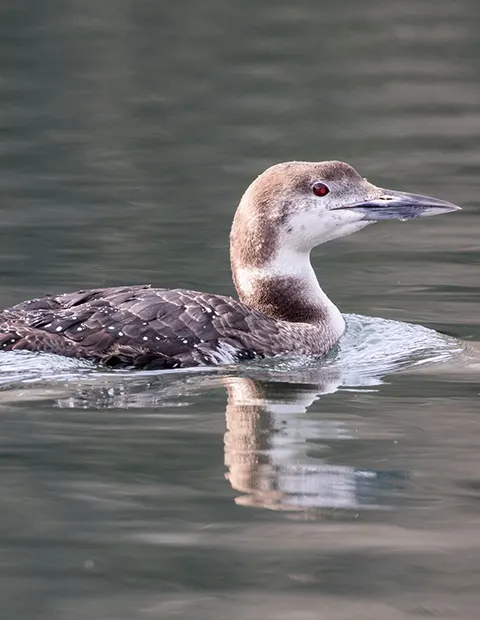
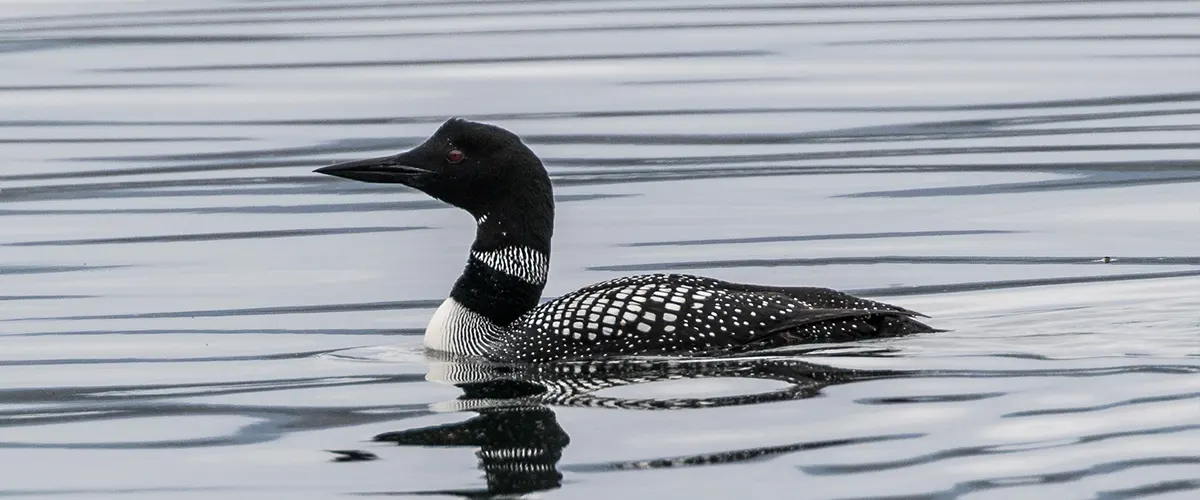
This is the tenth year researching Common Loons on Lake Jocassee, the first ever study of loons in winter in a freshwater environment. By studying Common Loons in a pristine environment, scientists can better understand the factors that influence their health and survival in the winter. Although loons typically winter in marine environments along coastlines, some now use freshwater reservoirs. 100+ loons winter each year on Lake Jocassee. Wintering in freshwater lakes in the southeast is relatively new in the life history of loons. The building of large fresh water reservoirs in the southeast started with the Tennessee Valley Authority in the 1930’s. Lake Jocassee is one of the newest reservoirs in the region, completed in 1973. It is not known exactly when loons starting using these reservoirs as stay-over locations and there is simply no reference to it in the scientific literature before this century. Sponsored by Earthwatch Institute for the first 3 years, Jocassee Wild Outdoor Education and Jocassee Lake Tours are now the hosts and guides for this research. This will be Dr. Jay Mager’s 10th year as lead investigator.
IMMERSION
In both weeks, expect total immersion into the lives of loons. Our days are spent observing and studying loons, our evenings spent discussing the day and enjoying talks by Dr. Mager, Dr. Paruk, and on some evenings talks by zoom with some of the country’s leading loon conservationists and researchers.
jocassee Spring Loon Migration
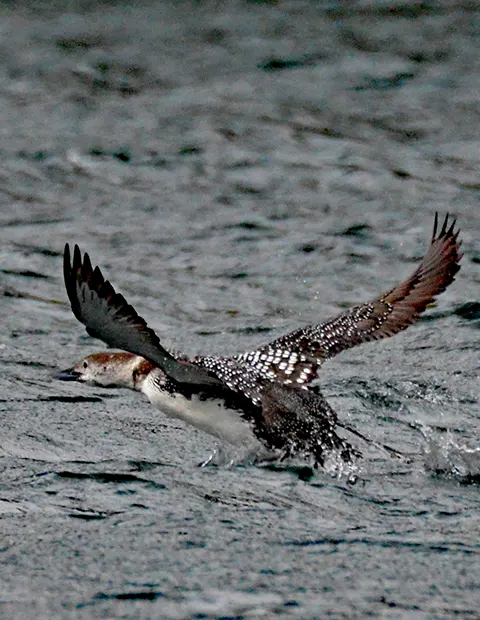
After five years of study of the winter behavior of Common Loons on Lake Jocassee – the first ever study of Common Loons in winter in a freshwater habitat – the research expanded in 2022 to the study of loons in spring migration. This will be our fifth year of studying spring Loon migration. Lake Jocassee is a significant stop-over lake for loons on their way from the northern Gulf of Mexico to their summer breeding lakes in the upper midwest and Canadian reaches farther north.
It is not uncommon to witness hundreds of loons depart en masse at first light and is surely one of the grandest natural history phenomena to observe in this part of the world. Dr. Jim Paruk, who also led the first three years of winter research on Lake Jocassee, is the lead investigator for this important work.
Loon Watch Info, Schedule & Dates
Winter Research: March 1-7 | Spring Migration: March 22-28
Loon Watch Cost:
$2050 per session. A limited number of private rooms are available for an extra $300. This includes lodging, all meals, and transportation from and to Greenville-Spartanburg International Airport (GSP). $500 deposit required.
Cost For Local Commuters:
$1350 per session, which includes evening meals. $500 deposit required.
Reservations:
There are only 10 spots per session available for volunteers, so early registration is highly recommended. Please call (864) 280-5501 or Book Online to reserve your spot.
Cancellations:
Cancellations up to January 15th will be fully refunded. All reservations are final after January 15th.
Accommodations:
Volunteers may be sharing rooms in 2 or 3 bedroom villas at Devils Fork State Park. These clean and comfortable villas are fully furnished and include linens, all kitchen appliances, basic cooking and eating utensils, heat, air conditioning, fireplace, microwave, satellite television, complimentary wi-fi, automatic coffee maker, screened porch, charcoal grill and picnic table.
Volunteer Duties:
The living circumstance is communal, and all meals are shared. Volunteers are expected to help with basic housekeeping. Dinner will be prepared for you. Breakfast and lunch items will be available for do – it – yourself preparation.
Transportation:
Greenville-Spartanburg Airport (GSP) is the point of arrival and departure for those arriving by plane. All transportation to and from GSP is provided at no extra cost.
The Jocassee Wild Outdoors Education
Loon Investigators & Team

Dr. Jim Paruk
PRINCIPAL INVESTIGATOR
Info
Jim Paruk is a Professor of Biology at St. Joseph’s College, in Maine, and has been studying Common Loons across North America for the past 28 years. He has published over 30 scientific articles on loons and recently wrote a book, published by the University of Minnesota Press entitled, Loon Lessons: Uncommon Encounters with the Great Northern Diver. The book provides the most current detailed account of what we know about loons, from their plumage, migration routes, to how old they live and how long a pair stays together.

Dr. Jay Mager
PRINCIPAL INVESTIGATOR
Info
Dr. Jay Mager is a Professor of Biological & Allied Health Sciences at Ohio Northern University, where he teaches courses in ecology, ornithology, and animal behavior. He is also a book review editor for the American Ornithological Society.
Jay’s life of loonacy began as a young boy spending his summers in northern Ontario, and he is fortunate to have worked with many individuals and mentors who share his interests in loon biology and conservation. Jay has studied loon communication and breeding behavior on breeding lakes in the United States and Canada, and has participated in this study of wintering loons on Lake Jocassee for the past ten years. He has always been fascinated by these charismatic birds, and has spent most of his life learning more about the ecological and behavioral requirements necessary for loon survival and reproductive success.
Jay earned his Bachelor of Arts degree in biology at Hiram College, where he conducted a senior thesis with Dr. Judy McIntyre (Utica College at Syracuse University) researching loon parental behavior in the Adirondack Mountains of New York. He earned his Master of Science degree in zoology at Miami University, where he completed a research project in the Ottawa National Forest within Michigan’s Upper Peninsula – in collaboration with Dr. David Evers and under the supervision of Dr. David Osborne – that examined how chick age and brood size influenced loon parental behavior. He earned his Ph.D. in neurobiology and behavior at Cornell University, where in collaboration with his mentor, Dr. Charles Walcott, he examined the behaviors by which Common Loons acquire and defend breeding territories, focusing on the context and conditions by which males give a male-specific call, the yodel, in northcentral Wisconsin.
Dr. Mager’s achievements in the field include:
2013-14 ONU Elanor H., and Robert W. Biggs Chair in the Sciences
2010 ONU Interfraternity & Panhellenic Council Outstanding Faculty Member of the Year
2008 ONU College of Arts and Sciences Outstanding Teacher of the Year
Publications:
Paruk, J., Chickering, M., Mager, J., Wilkie, S., and R. Espie. 2018. Initial indications of PAH exposure in Saskatchewan Common Loons. FACETS doi: 10.1139/facets-2018-0009. Mager, J.N. and C. Walcott. 2014. Dynamics of an aggressive vocalization in the Common Loon (Gavia immer): A review. Waterbirds 37 (Special Publication 1): 37-46. Mager, J.N., Walcott, C., and W.H. Piper. 2012. Male common loons (Gavia immer) signal greater aggressive motivation by lengthening territorial yodels. The Wilson Journal of Ornithology 124: 74-81.
Piper, W., Mager, J., and C. Walcott. 2011. Marking loons, making progress. American Scientist 99:220-227.
Mager, J.N., Walcott, C., and W.H. Piper. 2010. Common Loons can differentiate between yodels of territorial neighbors from non-neighbors. Journal of Field Ornithology 81: 392-401.
Brooks Wade
GUIDE AND CO-INVESTIGATOR
Info
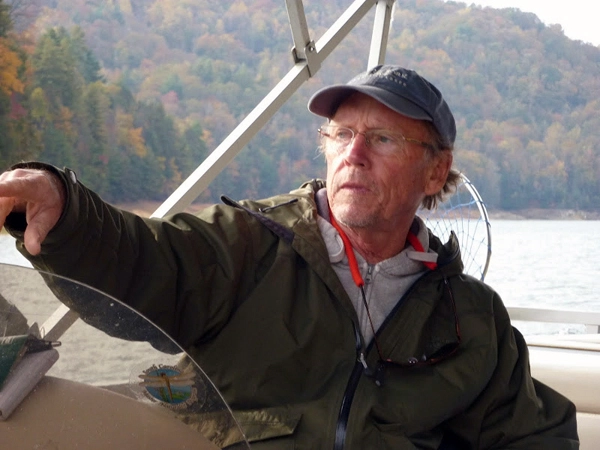
Brooks and his wife Kay own and operate Jocassee Lake Tours. From the time Brooks worked as a young man as a commercial fisherman in the northern Gulf of Mexico he has been under ‘the spell of the loon’. For the past fifteen years he has been a keen and constant observer of Jocasssee loons, and it is his persistent interest in and passion for these loons that ultimately drew the attention of loon scientists and Earthwatch. Brooks and Kay are also founders of Jocassee Wild Outdoor Education, a non-profit dedicated to outdoor education within the Jocassee Gorges.
Sherry Abts
CO-INVESTIGATOR & TEAM LEADER
Info
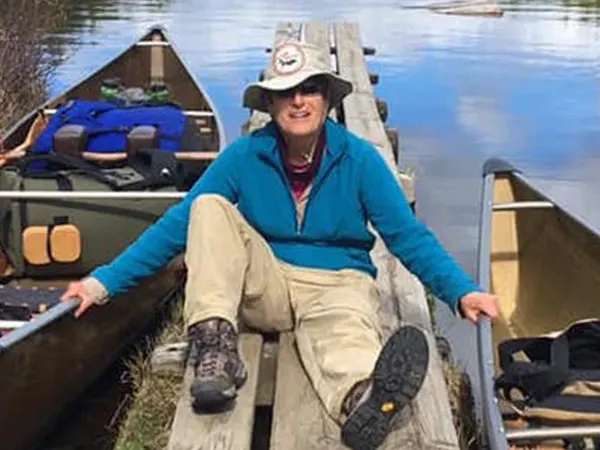
Sherry Abts lives in Ely, MN and was born and raised in Wisconsin. She spent her summers guiding canoe trips and working at summer camps. Sherry holds a B.S. Degree in Education from St. Norbert College, WI and a Masters Degree in Education from GA State. With over 30+ teaching, Sherry has enjoyed working at Lake Jocassee during the past 10 winters. She is currently trained in Environmental Ed., and works part-time as naturalist. Sherry is an involved “citizen scientist” collecting “loon data” since 1993 in MI, WI, SC, and MN, including night tagging with loon researcher Kevin Keneau in 2014.
Our Loon Research Partners:


Lake Jocassee
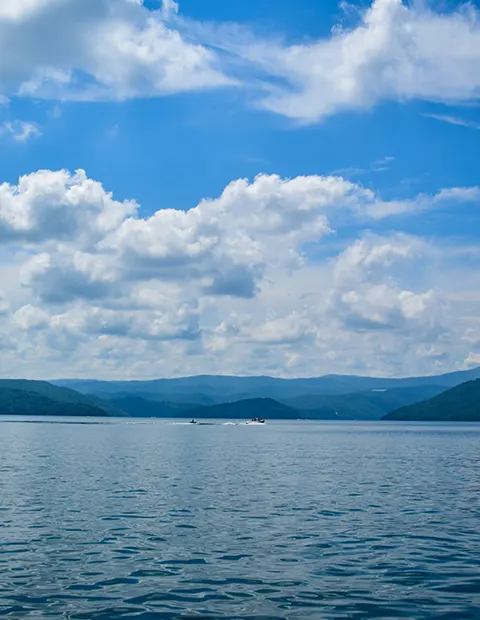
Lake Jocassee is a pristine mountain lake situated in the heart of the Jocassee Gorges in the mountains of Upstate South Carolina, a region National Geographic declared as one of the 50 last great wild places on earth. Lake Jocassee is a wilderness reservoir, with four mountain rivers and dozens of creeks that empty into it. There are multiple waterfalls that cascade into the lake. Many Bald Eagles populate the lake, and other waterbird species – including hundreds of Horned Grebes – are common on the lake in winter. At approximately 9000 acres and 90 miles of shoreline, it is a relatively small reservoir, making it ideal for the study of loons.
In most any weather conditions loons can be located and studied with relative ease. The approachability of the loons on Lake Jocassee is always a surprise to new volunteers and researchers. It is not unusual for loons to be calmly going about their daily business within a boat length or two of the observers.
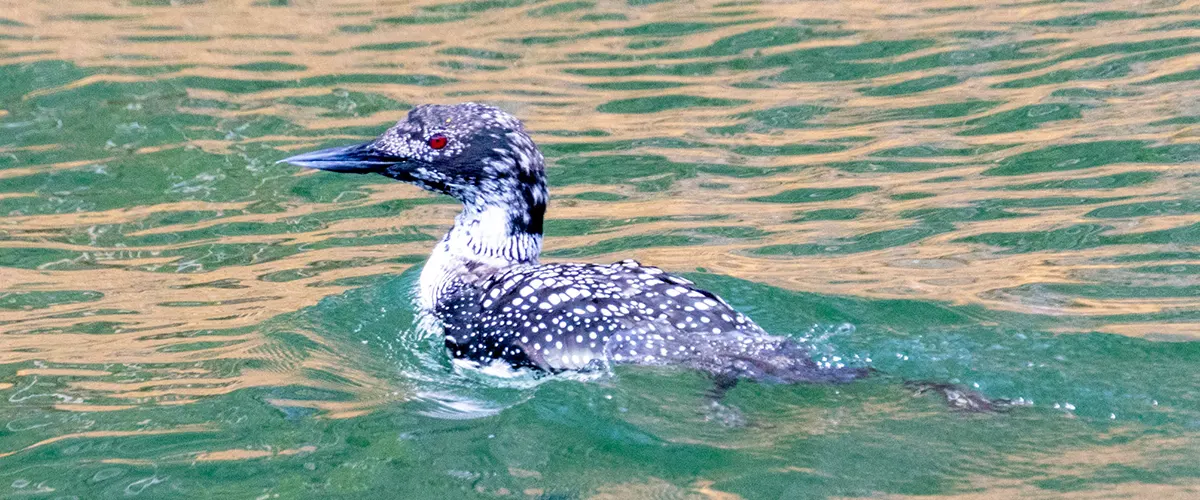
Most all the research is conducted from the boats. During the one week period scheduled for the 2026 session, expect to witness molting, preening and bathing behaviors, group foraging – including the ‘herding’ of schools of small forage fish – and departure behaviors as loons prepare for and begin to leave the lake in March. The results of the research will be used to raise awareness about the importance of reservoirs as habitat for loons and other waterbirds, and how to best monitor and manage them.
An Educational Jocassee Experience
Join Us For Our Loon Research Experience
Please click below to book and schedule your Jocassee Wild Outdoor Education experience.